

















TOW-RIG AND TRAILER PRE-TRIP CHECKLIST FOR SPRINT CAR TEAMS
By West Coast Sprint Cars Staff
AUGUST 7, 2026... A race weekend can be lost before the car reaches the pit gate. The tow vehicle, trailer and load-control equipment deserve the same methodical attention as the sprint car. A short written inspection helps the crew catch a loose coupler, damaged tire, weak tie-down point or failed lamp while there is still time to correct it.
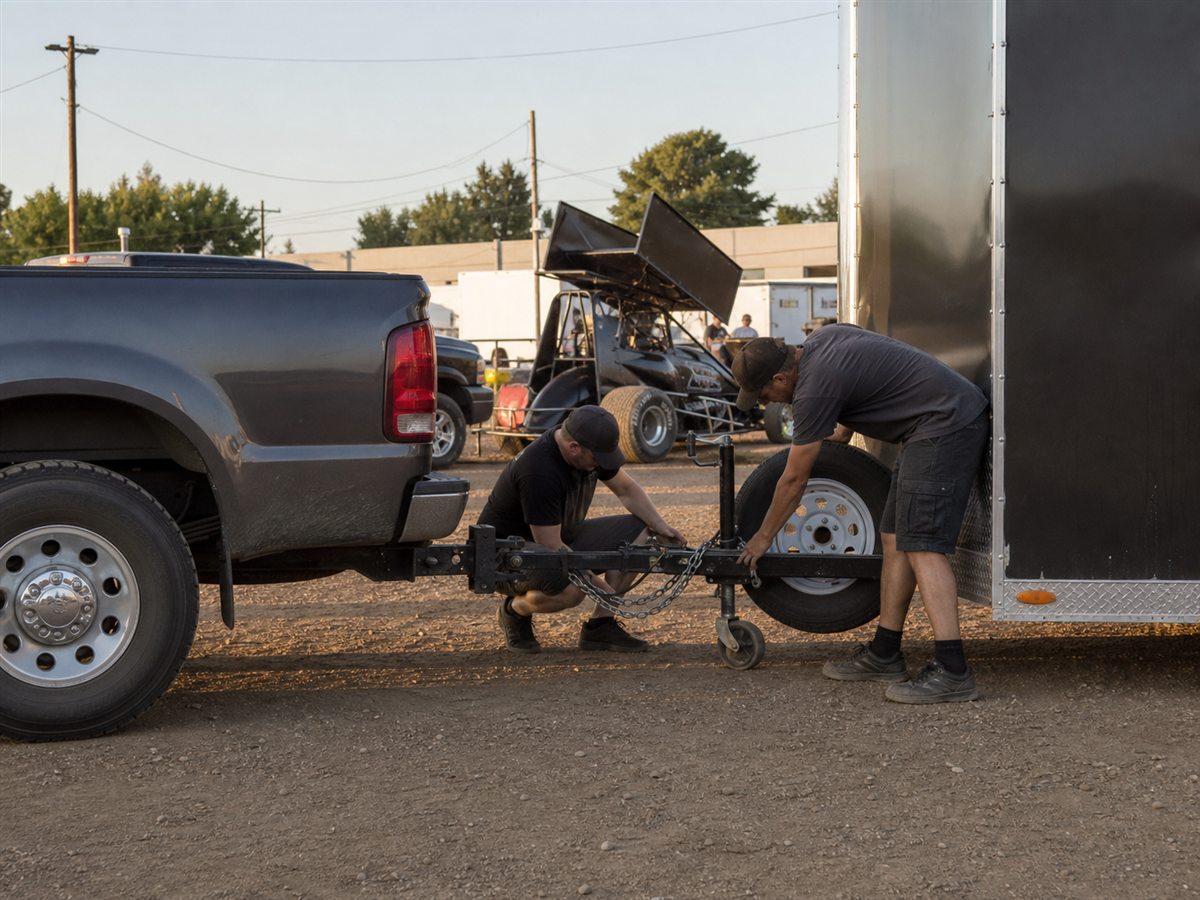
START WITH THE RATINGS, NOT A GUESS
Record the tow vehicle's gross vehicle weight rating, gross axle weight ratings and rated towing capacity. Do the same for the trailer and hitch components. The loaded combination includes the race car, fuel, wheels, tools, spares, crew gear and anything carried in the truck. If the team has changed cars, added cabinets or moved heavy spares since the last trip, visit a public scale and confirm the actual axle loads.
Keep heavy equipment low and close to the trailer's intended load area. The car and loose equipment should not be positioned by habit alone. A setup that towed cleanly with one inventory can behave differently after weight is moved behind the trailer axles.
COUPLER, CHAINS AND BREAKAWAY SYSTEM
Inspect the receiver, ball mount, coupler latch and retaining pin for movement, distortion or missing clips. Cross the safety chains below the coupler with enough slack for a full turn but not enough to drag. The breakaway cable must have a clear path to the tow vehicle and must not be looped around a part that could separate with the hitch.
The California DMV trailer safety guide recommends checking the ball-mount pin, coupler, safety chains and electrical connection before each trip. A crew member who did not connect the trailer should make the final independent check.
TIRES, WHEELS AND LIGHTS
Check tow-vehicle and trailer pressures when the tires are cold, using the pressure specified for the actual vehicle and load. Inspect both sidewalls, tread, valve stems and the spare. Look for age cracking, cuts, bulges and uneven wear. Verify lug-nut torque using the wheel or trailer manufacturer's specification, then check that the jack and tools can reach every wheel when the trailer is loaded.
NHTSA's TireWise safety guidance explains why correct pressure and regular tread inspection matter. Finish the walk-around with a two-person light test: tail lamps, brake lamps, turn signals, clearance lamps and the trailer-brake controller.
SECURE THE CAR AND EVERYTHING AROUND IT
Use rated straps or chains at approved attachment points and keep them away from sharp edges, hot exhaust parts and brake lines. The sprint car is only part of the load. Wheels, nitrogen bottles, fuel containers, jacks and toolboxes also need positive restraint. Close and latch cabinets, then inspect the floor for loose fasteners that can become projectiles during a sudden stop.
After the first few miles, stop in a safe location and recheck the coupler, tie-down tension, tire temperature and doors. Repeat the inspection after rough roads or a hard braking event. Write down any change the crew makes so the next driver starts with a known setup.
THE FIVE-MINUTE FINAL WALK-AROUND
- Hitch pin, coupler latch, crossed safety chains and breakaway cable secure.
- Truck and trailer tires cold-checked; spare, jack and lug tools present.
- Sprint car and loose equipment restrained at rated attachment points.
- Brake controller, lamps, doors, ramps and roof vents checked.
- Route, fuel stop and emergency contacts shared with the crew.
This checklist does not replace the instructions for the tow vehicle, trailer, hitch or tie-down equipment. It gives the team one repeatable pause before the rig joins highway traffic and turns race preparation into a crew-wide responsibility.