

















LATE-SUMMER PIT SAFETY PLAN FOR SPRINT CAR CREWS
By West Coast Sprint Cars Staff
AUGUST 14, 2026... Late-summer race days put a crew through two different hazards before the feature ever rolls: long periods of hot work around the trailer, followed by fast-changing weather that can turn an open pit area into the wrong place to be. A written heat and lightning plan gives the crew clear decisions before fatigue, noise or schedule pressure takes over.
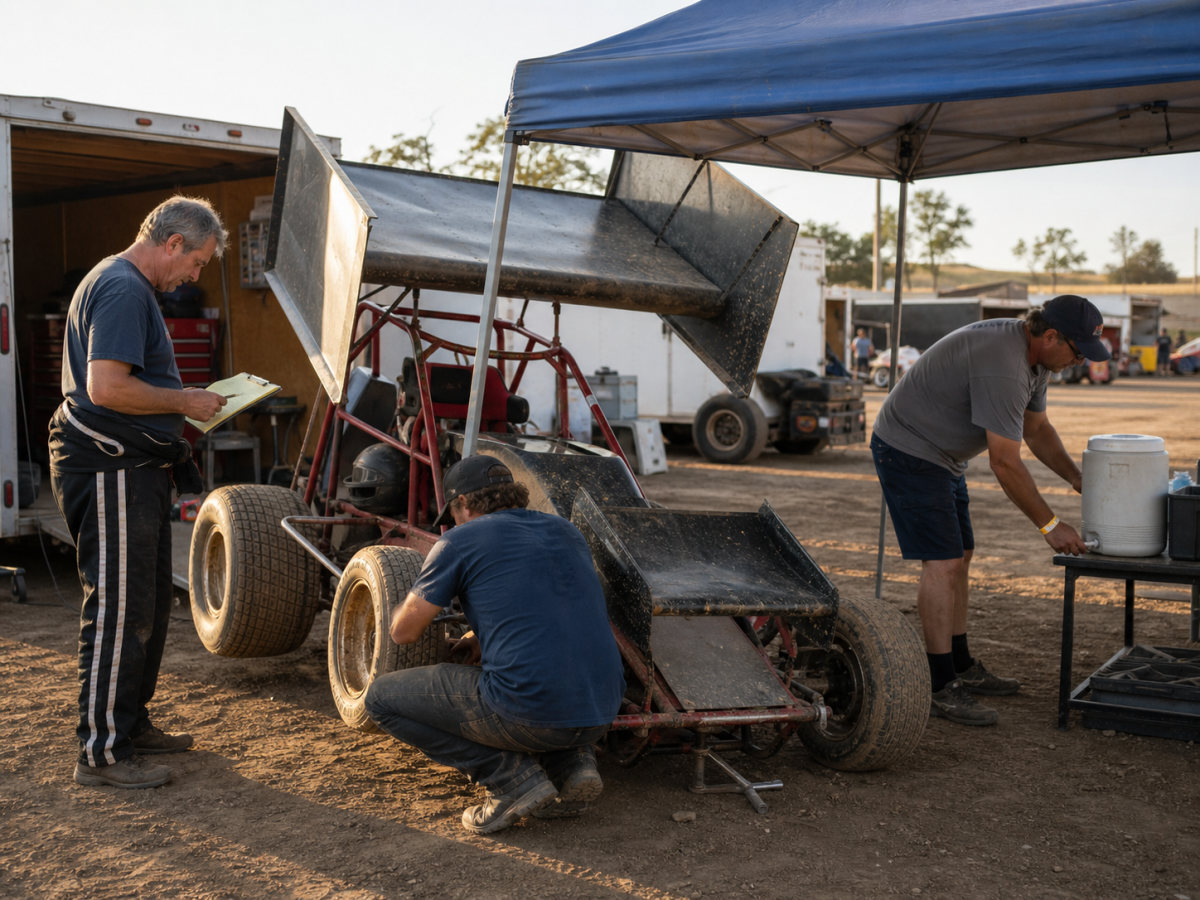
ASSIGN ONE CREW MEMBER TO WATCH CONDITIONS
The weather job should belong to a named crew member who is not simultaneously trying to tune the car, manage staging or solve a mechanical problem. Before unloading, that person checks the local forecast, expected temperature, humidity and thunderstorm timing. During the event, the same person keeps a reliable radar or weather-alert source open and knows where the nearest substantial building or enclosed vehicle is located.
Write the stop-work call, shelter location and all-clear procedure on the same pit sheet used for fuel, tire and chassis notes. The plan should cover the entire group, including anyone working inside the trailer, under an awning or at a remote parking spot. A pop-up canopy is useful for shade, but it is not a lightning shelter.
PUT WATER AND SHADE INTO THE WORK PLAN
Do not treat hydration as something each person will remember when the pit gets busy. Place cool drinking water where the crew can reach it without leaving the work area, assign someone to check the supply and schedule short recovery pauses before the warmest jobs. Engine heat, dark pavement, direct sun and protective clothing can add to the load even when the air temperature does not look extreme.
The CDC/NIOSH workplace recommendations for heat advise accessible cool water, regular rest breaks, a buddy system and a heat-alert plan. For moderate work in the heat lasting less than two hours, the guidance describes one cup of water every 15 to 20 minutes; longer periods of heavy sweating may call for balanced electrolytes. Those are planning points, not a reason to ignore an individual's health limits or medical advice.
Use the coolest available part of the trailer or a shaded area for recovery, but keep generator exhaust and fuel vapors out of the space. Fans can help move air; they do not replace water, rest or a decision to stop work when a crew member is becoming ill.
PAIR CREW MEMBERS AND SLOW THE FIRST HOT SHIFT
A returning volunteer, new team member or anyone coming back after time away may not be acclimatized to a hot race day. Give that person shorter hot-work periods and more frequent cool-down breaks. Split heavy tasks such as moving wheels, lifting a jack or pushing the car so one person is not carrying the full load while already overheated.
Use pairs during the busiest part of the afternoon. Each person watches for an unusual change in coordination, speech, pace or behavior. The buddy check is not a diagnosis; it is a prompt to stop, move the person to a cooler place and get qualified help when needed. Nobody should be expected to work through dizziness, confusion or a sudden loss of control simply because staging is close.
STOP THE JOB FOR WARNING SIGNS
Headache, nausea, dizziness, weakness, unusual irritability, heavy sweating or reduced urine output can accompany heat exhaustion. Confusion, altered behavior, collapse or loss of consciousness can signal a medical emergency. Move the person out of the hot area, begin cooling with available water, ice or fans and call 911 when emergency signs are present or prompt medical care is not available.
Put the track address, pit entrance and a clear vehicle meeting point on the crew sheet so a caller can direct emergency responders without searching for details. Keep one person with the affected crew member while another meets responders. The car and the race schedule can wait.
LIGHTNING ENDS THE OUTDOOR WORK
If thunder is heard or lightning is seen, stop work and move to the identified safe place. Do not remain under a canopy, beside the trailer, in an open-sided structure or near metal fencing. A substantial building offers the best protection; when one is not available, a hard-topped enclosed vehicle with the windows closed is the practical alternative.
The National Weather Service guidance for outdoor sports recommends a specific lightning plan, a designated weather monitor and at least 30 minutes after the last thunder before activity resumes. The monitor should account for the time needed to move every crew member and visitor to shelter rather than waiting for the storm to reach the pit.
THE PIT-GATE SAFETY CHECK
- Named weather monitor, forecast checked and alerts active.
- Cool water stocked, individual cups or bottles ready and shaded recovery area identified.
- Buddy pairs assigned; new or returning crew members receive lighter initial exposure.
- Emergency address, pit entrance, phone and responder meeting point written down.
- Lightning shelter identified; stop-work and 30-minute return rule understood.
This checklist does not replace track procedures, emergency services, medical advice or an employer's safety program. Its purpose is to give a small sprint car team a repeatable way to protect people when heat and weather compete with the pressure of getting the car ready.