

















PIT FIRE, FUEL AND EXHAUST SAFETY CHECK FOR SPRINT CAR TEAMS
By West Coast Sprint Cars Staff
AUGUST 18, 2026... A sprint car pit can place fuel, hot components, electrical equipment and moving support vehicles within a few yards of one another. A short written fire-and-spill routine gives the crew a common setup before the first engine starts, instead of asking someone to invent a response after smoke, a leak or an alarm appears.
This check is for race-day organization, not a substitute for track rules, fire-code requirements, trained emergency personnel or the instructions supplied with fuel containers, extinguishers and generators. The crew chief should confirm the venue's procedure at sign-in and make sure every helper knows who has authority to stop work.
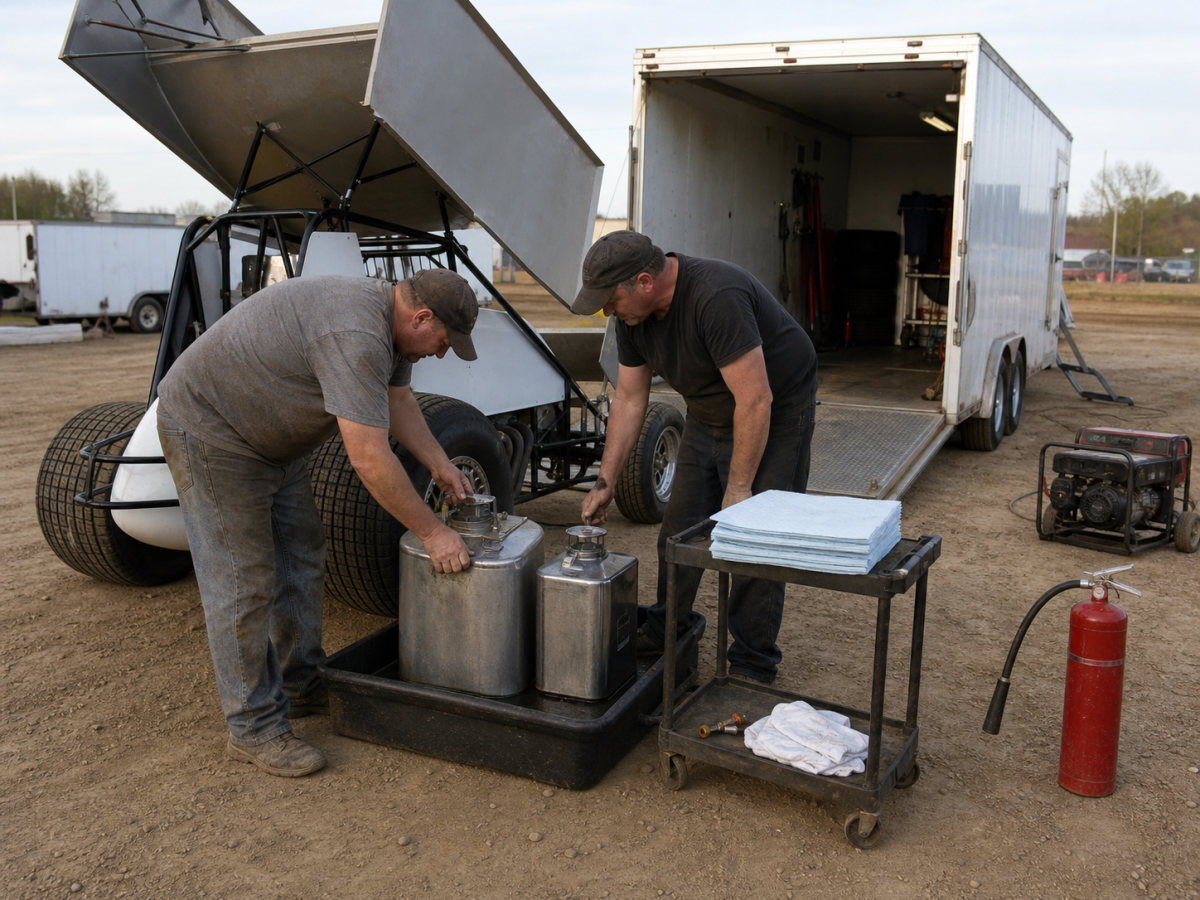
MARK A CLEAN FUEL ZONE BEFORE UNLOADING
Choose one stable, ventilated place for approved closed fuel containers, away from smoking, grinding, welding, battery charging, heaters and other ignition sources. Keep the area out of the path used by race cars, tow vehicles and foot traffic. A container hidden behind tires or under loose gear may be protected from view, but it is harder to inspect and easier to strike.
The OSHA flammable-liquids standard describes approved closed containers, control of ignition sources and prompt, safe disposal of leakage or spills. A volunteer race team should still follow the track's rules and local requirements, but those principles make a useful planning baseline: keep fuel closed when it is not being used, control sparks and hot work, and decide in advance how a leak will be isolated.
USE A TWO-PERSON TRANSFER ROUTINE
Before any transfer, stop the engine and let the crew follow the fuel-system and container manufacturer's instructions. One person manages the task; a second keeps the route clear, watches the container and checks for a leak. Do not let an arriving golf cart, tool run or last-minute setup change turn the fuel area into a shortcut.
Inspect caps, vents, hoses and fittings before the container is moved. If a seal is damaged, a fitting will not hold or liquid appears where it should not, stop. Do not improvise with an unapproved bottle, an open pan or a temporary plug. Move people away, notify the appropriate track official and use the venue's spill procedure. Never test for vapors with a flame.
KEEP THE EXTINGUISHER VISIBLE AND REACHABLE
An extinguisher buried behind the trailer door or boxed in by spare wheels is not ready for use. Place the unit on a stable mount or stand where the approach remains clear and where it will not be knocked over. Confirm that the gauge or status indicator, pin and hose appear intact, and make the assigned crew member responsible for the pre-session check.
OSHA's portable-fire-extinguisher guidance identifies Class B extinguishers for fires involving gasoline, oil and other flammable liquids. The correct rating, inspection interval, placement and training depend on the facility and applicable rules. A crew member should attempt to use an extinguisher only when trained, the fire is small, a clear escape route remains behind them and emergency help has been called. Otherwise, evacuate and leave suppression to qualified responders.
MAKE A SPILL RESPONSE SIMPLE
Keep compatible absorbent material, disposal bags or containers, gloves specified for the product and the venue's contact information together. The first decision is not how quickly the car can return to the track; it is whether the area can be approached safely. Stop ignition sources only when that can be done without entering the hazard, block traffic and tell the track official what leaked and where.
Do not hose fuel into dirt, a storm drain or an open waterway. Used absorbent and contaminated material need the disposal method required by the venue and local authority. Photographing or marking the location after the immediate danger is controlled can help the team inspect the container, hose and work sequence before the next event.
KEEP ENGINE AND GENERATOR EXHAUST OUTSIDE
A trailer door standing open does not make the trailer a safe place for a running generator or small gasoline engine. Exhaust can collect in enclosed or partly enclosed spaces and can be drawn inside through doors, windows or air intakes. Position the generator outdoors in the location allowed by the track, direct exhaust away from occupied areas and keep its hot surfaces out of the fuel zone.
The CDC/NIOSH guidance on carbon monoxide at work warns that carbon monoxide is colorless, odorless and toxic, and that dangerous concentrations can build rapidly around gasoline-powered engines, especially in enclosed or partly enclosed areas. Headache, dizziness, weakness, nausea or confusion around a running engine call for an immediate move to fresh air and emergency help when symptoms are serious or persistent.
THE FIVE-MINUTE PIT CHECK
- Approved fuel containers are closed, upright and protected from traffic.
- The fuel zone is separated from ignition sources, hot work and the generator.
- The correct inspected extinguisher is visible, reachable and not blocked.
- Absorbent material, protective equipment and the track spill contact are ready.
- The generator is outside, exhaust is directed away and the emergency lane is clear.
- Every crew member knows the stop-work call, evacuation route and meeting point.
Repeat the check after a major pit rearrangement, after fueling and before loading out in the dark. A consistent layout helps a small team notice what changed and protect people before schedule pressure turns a minor problem into an emergency.