

















ONE-MINUTE RACECEIVER CHECK BEFORE SPRINT CAR STAGING
AUGUST 30, 2026... A driver can hear a receiver in a quiet trailer and still miss race control after the helmet goes on, the engine fires and the car reaches the staging lane. The useful test is not “does it turn on?” It is whether one complete message reaches the driver through the exact battery, channel, cable, earpiece and helmet setup that will be used on track.
The current USAC rulebook page is the first place to confirm the rule set that applies to a particular class, while the West Coast site has long noted that RACEceivers are mandatory for this series. Track instructions still control on race day. Ask the official which channel or frequency is in use and when drivers must begin monitoring it; do not copy a setting from the previous event.
START WITH THE SIGNAL PATH
Treat the system as a chain: race-control transmission, selected channel, receiver power, output jack, cable, earpiece and the driver’s ear. A green display or a burst of static proves only one part. Lay the helmet, receiver and spare battery beside the car before the driver straps in. Look for a loose battery cover, a plug that is not fully seated, a cable crushed by the helmet padding or a receiver that can slide out of its pouch.
The manufacturer’s scanner operating tips explain that channel selection must be locked, squelch normally remains on and a good-quality battery matters when audio becomes noisy or inconsistent. Follow the instructions for the exact model in use. Do not assume that a rechargeable unit, AAA-powered unit and a combined two-radio setup share the same controls.
TEST IT THE WAY THE DRIVER WILL USE IT
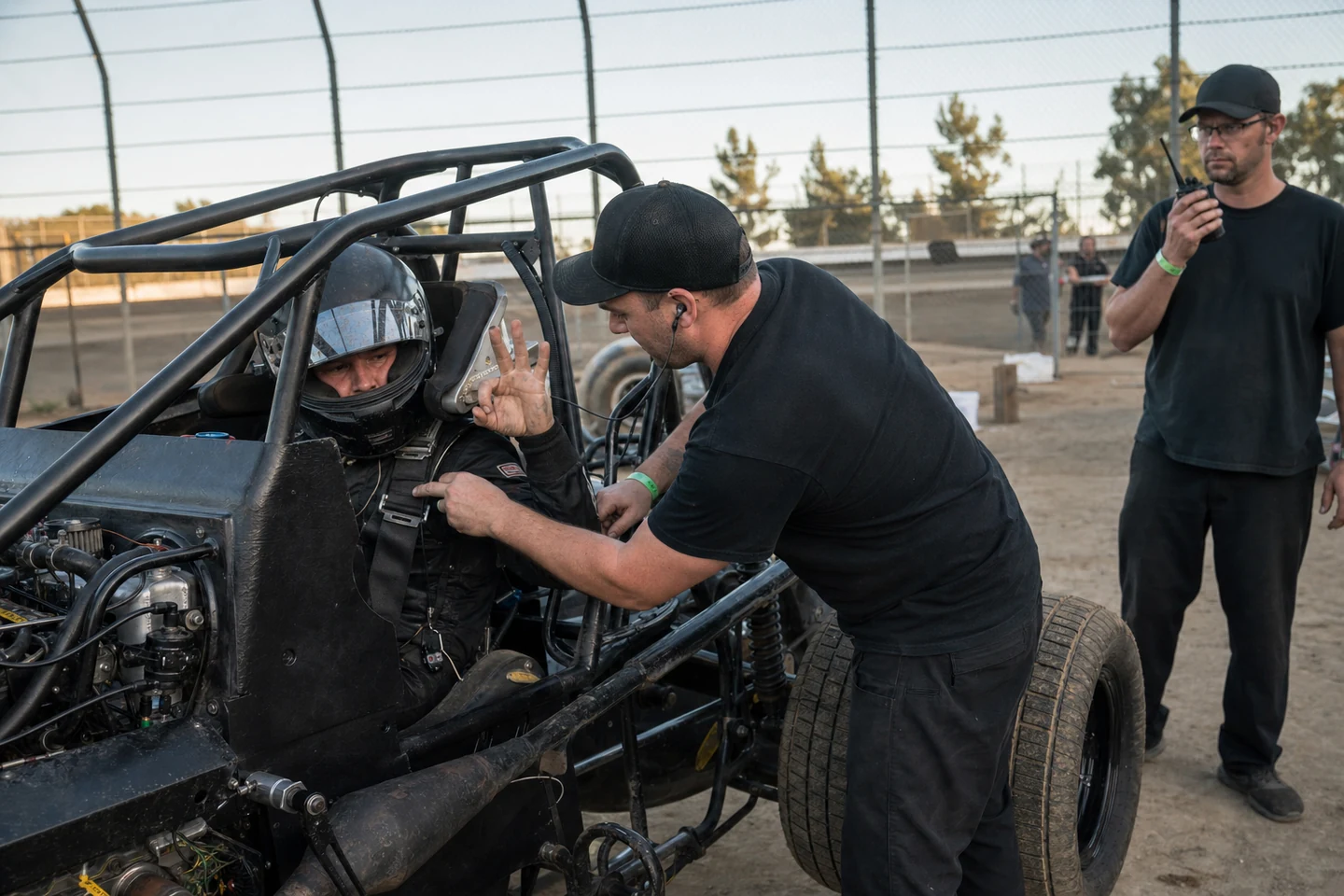
Have the driver put on the balaclava if used, earpiece, helmet and restraint system, then settle into the cockpit with belts positioned normally. The crew member should route the cable so the driver can turn the head without pulling the plug and so the wire cannot catch a buckle, steering component or cockpit edge. The receiver belongs in its secure race position, not in someone’s hand.
- A crew member stands several feet from the car and sends one short test call on the confirmed channel.
- The driver repeats the last word or gives the team’s agreed hand signal. A nod alone can hide a guessed message.
- The crew repeats the call with normal pit noise present and the driver’s helmet fully closed.
- The driver turns the head left and right once. Audio should remain clear without the plug moving or the cable tightening.
Set the volume for intelligible speech, not maximum loudness. The same manufacturer guidance recommends backing the receiver down from full volume and using the in-line control for the final adjustment when that control is fitted. Too much level can make speech harsh without fixing a poor connection or incorrect channel.
DIAGNOSE THE FAILURE IN ORDER
If the test fails, stop changing several things at once. First confirm the official channel; next check battery condition and seating; then reseat the output plug; then substitute one known-good earpiece or cable. Repeat the same test message after each change. That sequence tells the crew what actually fixed the problem and keeps a faulty part from returning to the gear bag as “probably fine.”
The manufacturer’s receiver FAQ links all-static symptoms to battery condition and, when a new battery is already installed, to the squelch setting. Those are useful first checks, not permission to troubleshoot indefinitely in the staging lane. If the receiver still drops words, crackles when the driver moves or will not hold the confirmed channel, replace the suspect unit and tell the appropriate official.
MAKE A GO, SWAP OR REPORT DECISION
GO means the driver heard two complete calls in the helmet, the channel is locked, the cable stayed secure through head movement and the receiver is fixed in its race position. SWAP means the crew found an intermittent battery, plug, cable, earpiece or receiver and can install a known-good replacement before leaving the pit. REPORT means the team cannot verify reception or believes the problem may be with the track transmission; contact an official instead of sending the car out on an assumption.
After the check, do not leave the receiver buried under gloves or tools. Keep the tested setup with the driver and make the spare battery, earpiece and receiver easy to reach. One disciplined minute before staging is enough to turn “the display was on” into evidence that the driver can actually hear race control.