

















Fastest Qualifier, Different Winner: Reading Sprint-Car Results
September 9, 2026 · Reading the race archive
The first name in a sprint-car results report may not be the driver who won the feature. Before following a name down the page, read the label above it. A qualifying list ranks a timed performance; the feature result records a different contest. Treating those lists as interchangeable can turn a perfectly ordinary race report into an apparent contradiction.
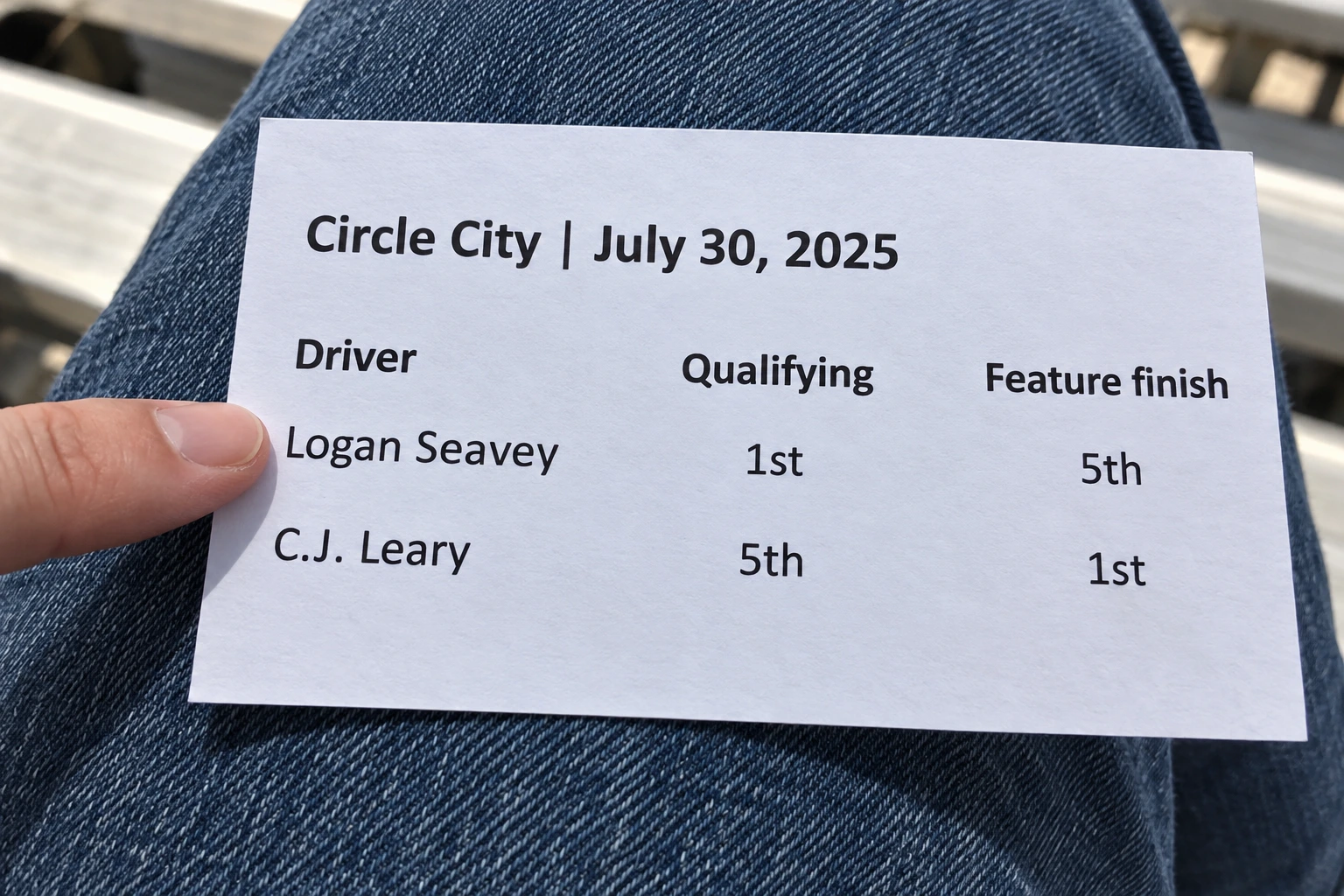
The USAC National Sprint results from Circle City, July 30, 2025 put Logan Seavey first in qualifying at 12.027 seconds and fifth in the feature. C.J. Leary qualified fifth, started second and won. This historical National-series example is not a West Coast result or a current standings update.
| Driver | Qualifying rank | Feature finish |
|---|---|---|
| Logan Seavey | 1st | 5th |
| C.J. Leary | 5th | 1st |
On a printed comparison, put a finger on the driver's name and move across the row before moving down to another driver. Read each column heading aloud if the positions seem inconsistent. Keep that heading attached to every number you repeat; a copied position without its label loses the distinction the table was designed to preserve.
The number beside a finish may describe the start
The report identifies the figures in parentheses as starting positions. Shane Cottle finished fourth from 22nd, improving 18 places. That arithmetic does not establish exactly 18 on-track passes: start-to-finish movement and a count of overtaking manoeuvres answer different questions.
Read the legend before interpreting another report's brackets or abbreviations. Keep car number, starting position and finishing position in separate fields when making notes. A short handwritten label beside the figure is more useful than relying on its place in a copied line, especially when a phone wraps the text onto several lines.
Starting order has its own explanation. The USAC event information for Circle City on July 27, 2026 describes qualifying, heat transfers and an inversion among eligible fast qualifiers. It also allows the chief steward to alter the base format. That dated example shows why a fast lap need not mean a front-row start; it is not a universal rule for every series, nor evidence of the exact procedure used a year earlier.
For a specific archived meeting, keep its result and its applicable event format together. If the format cannot be found, report the published start and finish without inventing an inversion to explain them. A result sheet establishes the numbers it contains; it cannot supply a missing rule merely because another meeting used one.
When returning to the West Coast news archive, begin with the event date, venue and series. Then follow one driver through the labelled lists. You should finish with a precise statement such as “qualified first, finished fifth,” rather than a single position stripped of the session that gives it meaning.