

















THREE-BOLT WHEEL-COVER CHECK BEFORE A SPRINT CAR LEAVES THE PIT
AUGUST 31, 2026... A wheel cover can look flat from several feet away while one fastener is only finger-started, a mounting hole is beginning to elongate, or packed dirt is holding an edge away from the wheel. The useful final check is short and physical: confirm that the cover is legal for that event, put a hand and tool on all required fasteners, and stop the release if the cover does not sit evenly.
Event rules come first because the permitted side can change with the venue. A current World of Outlaws venue bulletin says Knoxville Raceway and Eldora Speedway allow right-side wheel covers only at their 2026 series events and warns that losing a cover brings a minimum fine. A crew should read the event bulletin and the applicable rule book before fitting hardware, not copy the previous track's setup.
CONFIRM THE RULE, THEN LOOK AT THE HARDWARE
The 2026 World of Outlaws rule update requires wheel covers to be bolted with at least three 5/16-inch flanged magnetic-steel or titanium bolts and an approved fastening system. That is a precise series requirement, not a universal torque instruction. Use the fastener system approved for the car and event, and follow its installation information rather than inventing a number in the pit.
USAC's 2026 National Sprint rule update also says a wheel cover must be held by a minimum of three bolts, recommends 5/16-inch hardware, and notes that a dislodged cover can lead to a fine. The shared practical point is simple: every required attachment point must be present and doing real work before the car moves.
READ THE COVER, NOT ONLY THE BOLT HEADS
Start with the car stationary and the wheel cool enough to touch safely. The cover should sit flat around its edge, without a lifted section, a crack radiating from a hole, or dirt trapped between the cover and its mounting surface. A shiny bolt head is not proof of a sound attachment if the hole beneath it has stretched or the nut assembly can turn with the tool.
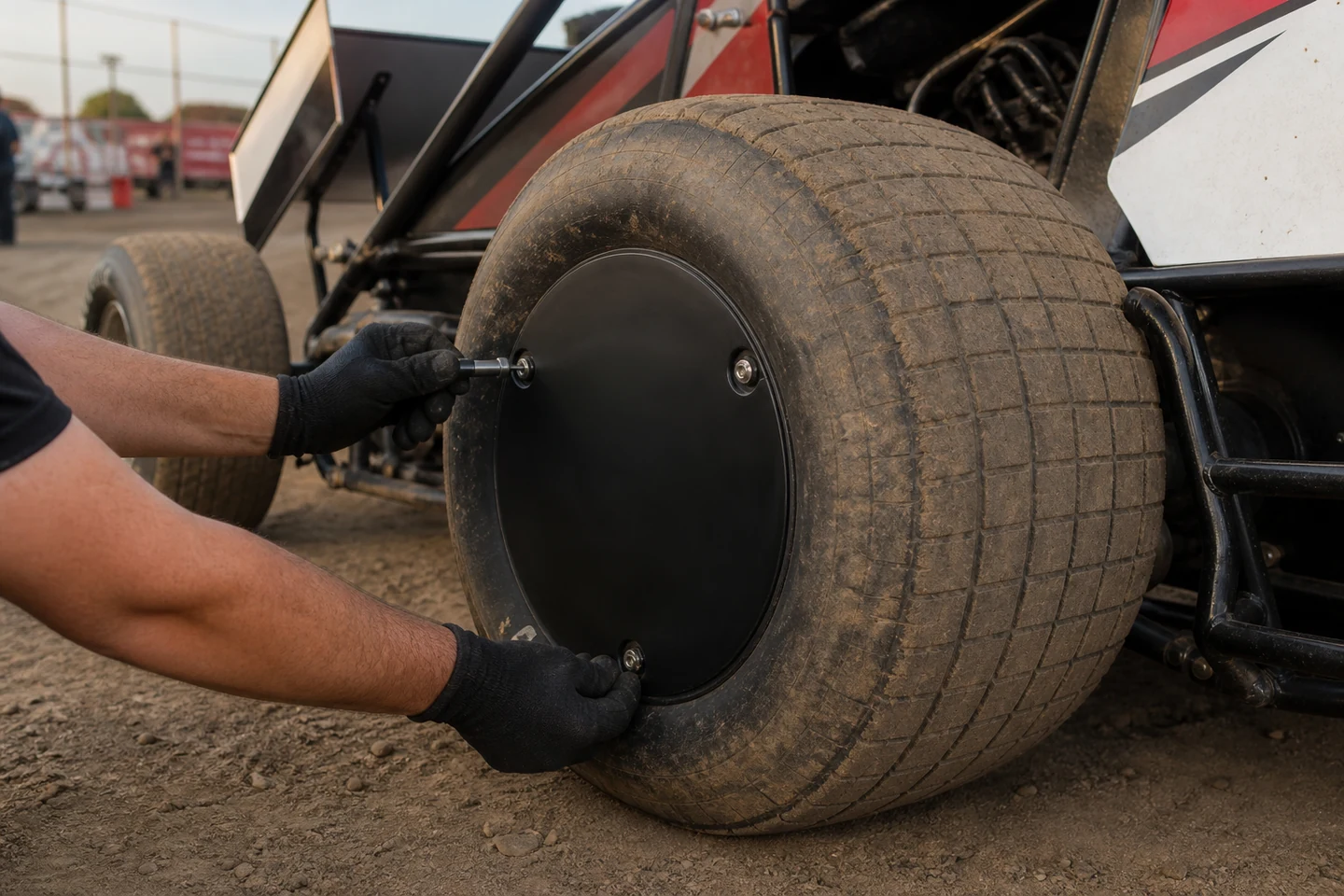
Work around the cover in one direction so no fastener is skipped. Keep one hand on the cover while the other checks the first bolt with the team's correct tool, then repeat at the second and third points. Watch for movement between the cover and wheel as the tool loads the fastener. If one point turns differently, will not seat, or pulls the cover out of plane, the answer is not extra force. Remove the cover and inspect the bolt, hole and nut assembly.
- SEATED
- The edge stays even and each attachment point carries load without moving the cover.
- QUESTIONABLE
- A hole looks worn, a fastener feels different, or the cover shifts as the tool touches it.
- STOP
- A bolt is missing, damaged or unable to hold, or the cover is cracked or will not sit flat.
MAKE THE CHECK THE LAST TOUCH BEFORE RELEASE
Wheel service changes the order of work. If a tire is changed, a cover is removed, or another crew member takes over the corner, the three-point check starts again. The person who completes it should give one clear release call to the crew chief. That keeps an interrupted job from being mistaken for a finished one when staging begins to move.
The cover check also belongs inside the broader pit-lane movement routine: the car remains stationary, tools are clear, and no one stands in the release path. If a fastener or cover fails the check in staging, return to a safe work position instead of relying on tape, a tie, or a hurried guess.
A good result is visible and repeatable. The event permits the installed cover, exactly the required fastening points are present, the cover sits flat, all three bolts have been physically checked with the correct system, and one crew member owns the release call. That is enough to turn a quick glance into evidence that the wheel cover is ready to leave the pit.