

















A HARNESS WEBBING AND LATCH CHECK BEFORE A SPRINT CAR PUSH-OFF
A sprint-car harness has to be read twice. The empty cockpit shows the label, webbing and mounting path. The seated driver shows whether those parts lie flat, reach the latch without a twist and release as expected. Skipping either view leaves part of the restraint hidden.
This is a condition-and-routing note, not installation instruction. Event rules and the restraint manufacturer decide the specification, service date, anchors and hardware. Before push-off, the crew looks for a missing label, damaged webbing, foreign material, a reluctant latch or an uncertain mount. The radio can follow the site’s one-minute RACEceiver check; the harness comes first because it cannot be sorted out while rolling.
The empty cockpit shows what the driver hides
Lay the shoulder and lap straps where they naturally fall without a driver. The first pass asks whether each belt can be followed from the latch toward its attachment point, whether the webbing stays flat through its adjuster, and whether the stitching looks unchanged. A belt disappearing behind the seat is not evidence of a known mount. If the crew cannot trace the specified path, the person responsible for the installation takes over.
The date and specification matter as much as appearance. USAC’s 2026 National Sprint safety update says seat belts must meet SFI 16.5 or 16.1, carry a label, remain within the manufacturer expiration label and mount to the frame. That is a series rule, not permission to guess at another event. It gives a useful pre-push-off sequence: confirm the current rule, read the actual label on the car, and stop when either is missing or unclear.
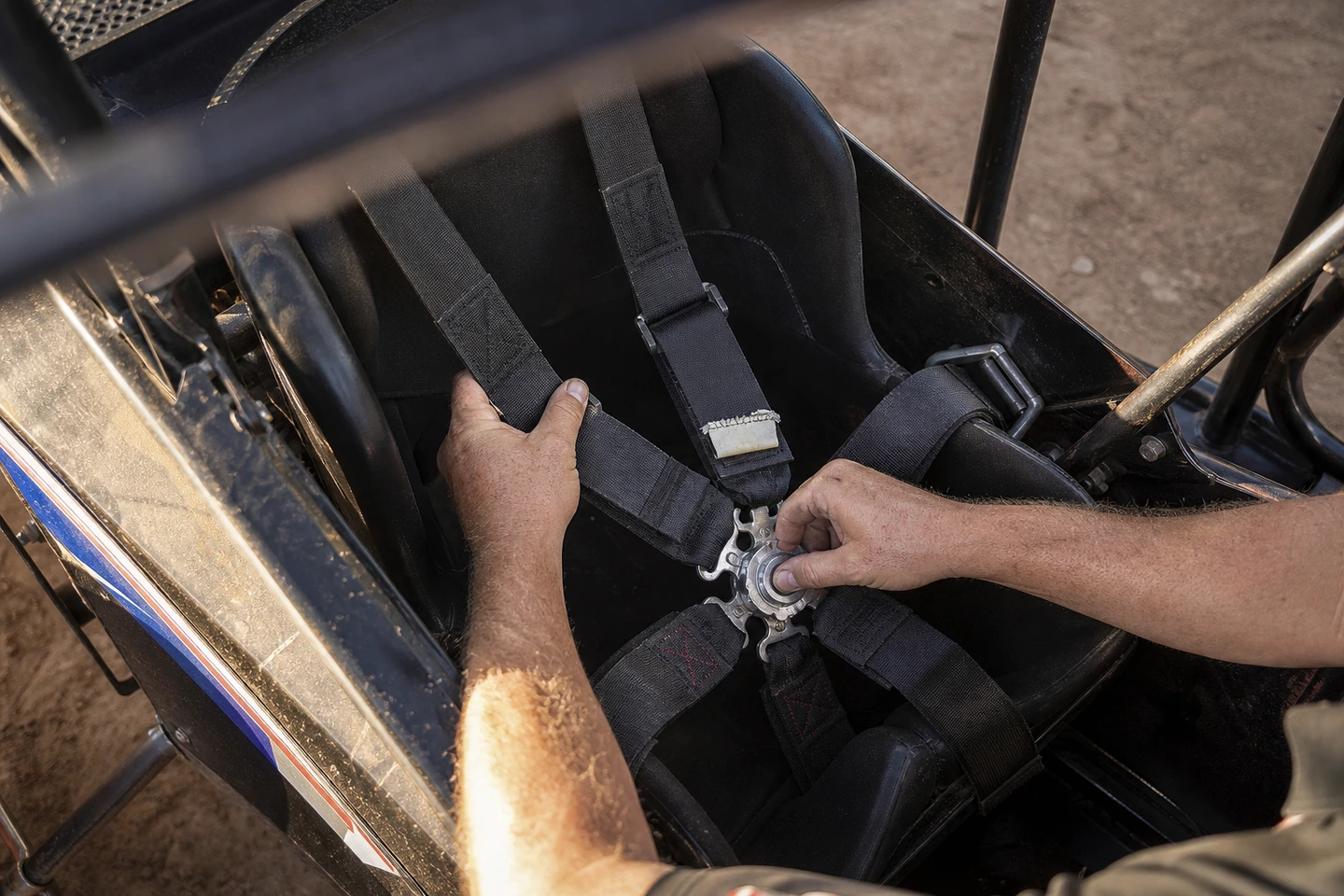
The image matches that first pass. One crew member separates the shoulder webbing and checks the central latch. The straps lie across a containment seat and route toward the car structure. No driver hides a fold or loose end.
Read the webbing under steady light. A cut, melted or glazed fibers, contamination, pulled stitching or a damaged adjuster changes the decision. Do not clean with an unapproved chemical, sew a loose edge, substitute hardware or tape over damage. Preserve the condition and ask the manufacturer, technical official or qualified installer what happens next.
The central latch gets its own motion. Bring every tongue to the mechanism in the order specified for the restraint, confirm positive engagement, then operate the release with the cockpit empty. The official SFI specifications list separates driver-restraint assemblies under specifications 16.1 and 16.5 and gives their recertification interval. That system view is the point: a clean latch does not cancel damaged webbing, an out-of-date label or an unknown mount.
A seated driver changes the question
Once the empty-cockpit check is understood, the driver sits in the normal seat and safety equipment. Now the crew looks for geometry rather than loose-belt appearance. Shoulder straps should follow the intended path without rolling at the neck or folding through an adjuster. Lap belts should stay on the intended pelvic path rather than climbing because a strap was shortened from the wrong side. The anti-submarine strap should reach the latch without being trapped beneath clothing or routed around an object that was not there during installation.
Adjustment is not a contest to remove every millimeter of movement. Use the manufacturer’s sequence and the driver’s normal position. The driver should be able to identify the latch and demonstrate the expected release motion while belted. A crew member watches the webbing as the driver settles, takes a normal breath and moves hands to the controls. If a belt folds, an adjuster shifts unexpectedly, or the latch becomes difficult to reach, the system needs attention before push-off.
Mounting stays outside the realm of improvisation. The current USAC rulebook page publishes the active National Sprint appendix alongside the general safety rules. The crew should read the version that applies to the car and event, then use the restraint manufacturer’s installation instructions for the actual anchor hardware and geometry. A visible belt end is not a mounting plan, and a familiar bolt is not an automatic substitute for a specified chassis anchor.
The release call needs one complete sentence: label current for this event, webbing and stitching sound, latch positive, paths flat with the driver seated, mounts known. If the crew cannot say the whole sentence, the car waits.
Repeat the check after the seat, restraint, cockpit panel or driver equipment has changed, and after any incident that could load or contaminate the system. A hurried re-latch is not the same as confirming the original condition. The person who performs the final seated view should own the release call so a partial check is not passed from one crew member to another as completed work.
The best harness check leaves no dramatic moment. The car reaches push-off with the same webbing path the crew traced in the empty cockpit, the same latch action the driver demonstrated while seated, and no unanswered question hidden behind the seat.