

















PIT-TRUCK CAB ACCESS BEFORE THE FIRST UNLOAD
A support truck can arrive with the trailer, tires and pit equipment in perfect order and still create a bad first move. If the driver has to jump from a lifted cab, step onto mud or carry a radio case while climbing down, the unloading plan begins with an avoidable loss of balance. Cab access deserves its own check before the crew opens the trailer.
The useful question is not whether the truck has a step. It is whether one person can enter and leave while facing the vehicle, keeping both hands available and landing on a clear surface. OSHA's official vehicle-operation guidance for elevated cabs calls for secure steps and handholds, three points of contact and a clean route. A race pit is not an oil field, but the same body mechanics apply every time a crew member climbs in for keys, radios, paperwork or a tool bag.
Make the check after parking in the assigned pit space, not at home on a level driveway. Dirt, gravel, trailer angle, night lighting and the position of neighboring vehicles change what the first step feels like. The truck should be secured, the trailer settled and the intended walking lane visible before anyone judges the step.
Park the truck before judging the step
Start with the door closed and look at the ground below the cab. A rut directly under the running board can turn a normal drop into a long reach. Loose dirt on the tread can make a wide board less dependable than a narrow clean one. If the door opens into the trailer tongue, a fuel cart or another team’s lane, the entry point is wrong even when the hardware is sound.
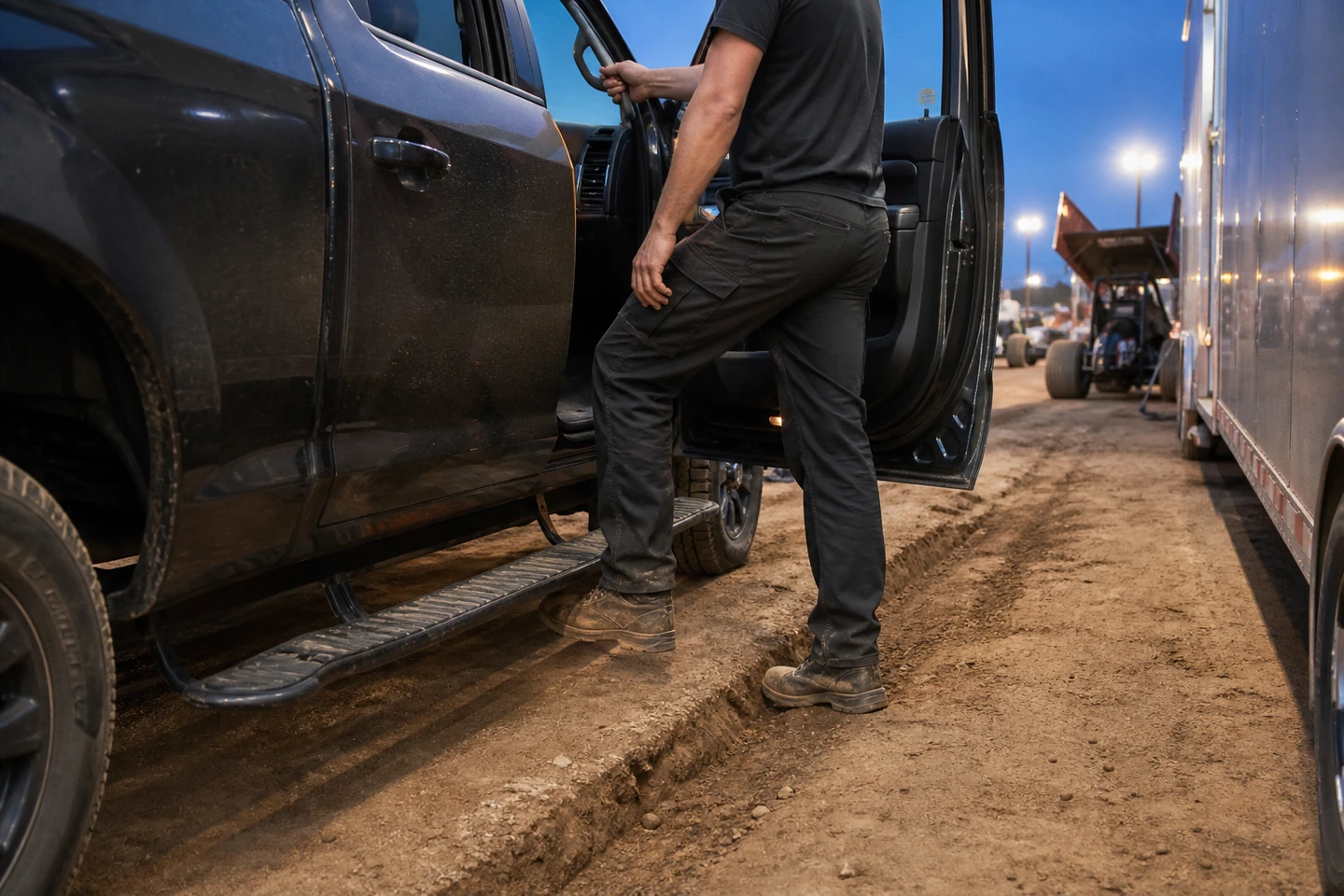
Open the door fully and test the route without carrying anything. One boot goes on the board, one hand goes to the vehicle handhold and the other hand remains free. The person should be able to move up and down without pulling on the steering wheel, door pocket or loose trim. The same OSHA guidance says to keep steps and shoes clear of mud, snow and debris. That makes dirt removal part of the access check, not cosmetic cleanup.
Now repeat the motion under pit lighting. Look for a hidden edge, glare on polished metal or a dark gap between the board and rocker. A crew member should be able to identify the entire landing area before shifting weight. If not, change the parking position or add safe area lighting; do not ask people to memorize an unseen foothold.
The board has to match the support truck and its work
A running board is useful only when its mounting, length and step surface fit the exact truck. Model year, cab style and factory mounting points matter. A board that ends before the rear door may be fine on one cab and leave the usual passenger exit unsupported on another. A very low drop step can help short passengers but sacrifice clearance over ruts. A narrow tube can preserve clearance yet provide too little boot contact when dust or moisture reaches the tread.
Do not ignore the truck’s own load information while planning pit equipment. Federal certification rules in 49 CFR 567.4 require the vehicle label to include gross vehicle and axle weight ratings. Read the door-area label for the actual support truck and use its manufacturer documentation when counting people, tools, tires, fuel and other cargo. The running board solves entry geometry; it does not increase vehicle capacity.
For a vehicle-by-vehicle starting point, bestrunningboards.com organizes options by truck brand and configuration. The next check still belongs to the crew: confirm the current manufacturer application table, mounting method, stated load limit and interference with mud flaps, rocker protection or trailer wiring. A broad catalog is useful for narrowing choices; it does not make two different cab layouts interchangeable.
Inspect the step as installed, not only as pictured in a listing. Brackets should sit where the application instructions specify, fasteners should be present and the board should not rock when loaded normally. Look for a bent edge, cracked finish, loose end cap or fresh contact mark. If the board moves, a mount is uncertain or the stated fitment cannot be confirmed, take it out of service until the correct instructions or a qualified installer resolve it.
Keep the load on the ground while someone climbs
The easiest way to lose three-point contact is to put a case in one hand. Keep helmets, radios, paperwork and small parts on the ground or seat until the person is stable. A second crew member can pass the item after the climb, or the equipment can move through a different door that has a better loading height. The cab step is for a person; it is not a shelf for fuel jugs or a place to stage loose tools.
Separate the access lane from the vehicle-movement lane. No one should perform the step test while the truck is being repositioned or while another vehicle is backing beside it. The same lane discipline belongs in the team’s broader tow-rig and trailer pre-trip check: agree on where the truck will stop, where the crew will walk and who controls the first move.
A small cleanup kit earns its place near the door: a stiff brush for packed dirt, an absorbent cloth for moisture and a light that can illuminate the step without blinding the person using it. None of those items repairs a loose mount or damaged board. They only restore a usable surface after the hardware has passed inspection.
Use one release call before the pit gets busy
Finish with one person entering and exiting twice under the conditions the team actually has. The call is short: truck secured, ground firm, door clears the lane, board fixed, tread visible, handhold solid and both hands free. If any part cannot be confirmed, change the parking or equipment plan before unloading begins.
Track and series requirements still control the pit. The current USAC rulebook page is the place to locate the applicable competition and safety documents; the event organizer’s pit instructions decide local traffic and parking details. This cab-access note does not replace either one. It closes the gap between arriving safely and starting work safely.
The best result is ordinary: nobody jumps, nobody balances a case on one arm, and nobody discovers a loose or mud-covered step after the lane fills with people. The support truck becomes a stable part of the pit instead of the first obstacle the crew has to overcome.